Antalya Public Transport for Everyday Journeys
Antalya public transport can make two apartments with similar locations feel very different in everyday life. A nearby stop does not necessarily mean a convenient journey to work, appointments or regular activities. City buses and the Antray tram serve different corridors, while transfers and walking distances affect the complete trip. This guide explains how to check routes, directions, payment methods and connections, then test the same journey from two prospective homes before making a housing decision.
RIVI HOME Editorial Team Published 10 min read
In this guide
How Antalya public transport works
Antalya has a city bus network and the Antray light rail system. Both can be relevant to ordinary residential journeys, but they do not offer identical coverage. A home near a tram station may provide a straightforward rail journey to one destination, while another address might be better connected by a direct bus. Neither arrangement guarantees a convenient trip to every part of the city.
The important distinction is between a service passing near your home and a service travelling towards your actual destination. Check the correct boarding side, route direction, interchange points and final walking section. A map showing a line close to both addresses is not enough to establish that the journey works in practice.
Use the Antalya Metropolitan Municipality transport portal for official route and fare information. The AntalyaKart journey-planning tools also show stops, route directions, vehicle positions and estimated arrivals. These are planning aids rather than promises that a particular vehicle or connection will arrive at an exact time.
City buses and the Antray tram
City buses connect residential streets and destinations across the urban area. When examining Antalya bus routes, start with the stop closest to the actual building entrance, not simply a route number mentioned in a property advertisement. Look at the full stop sequence and check whether the returning service uses the opposite side of the road or a different street.

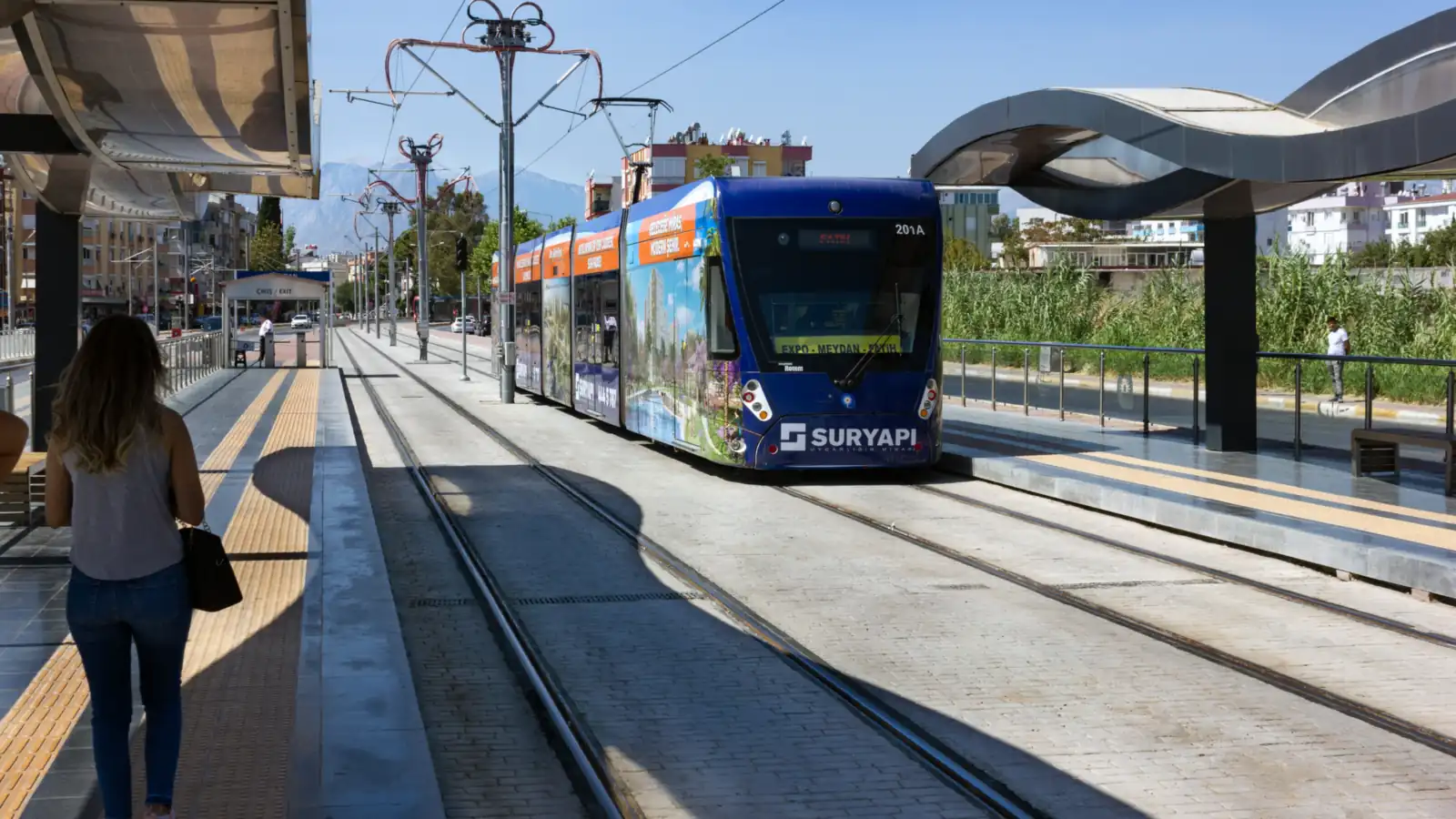
The Antalya tram system includes Antray services with named stations and defined rail corridors. Station access can make journeys easier to understand, but a rail line is useful only when its stations and connections match your routine. Check the destination shown for the direction of travel and confirm any necessary change between services.
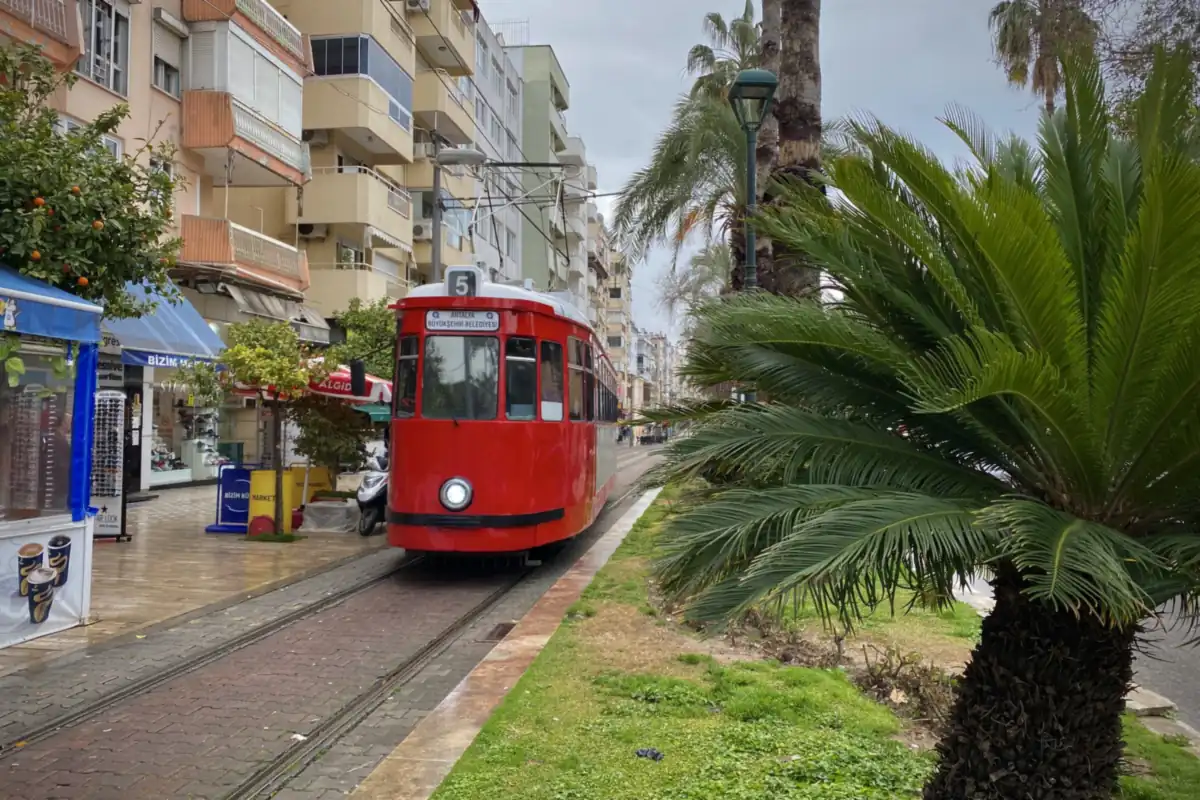
The historic tram is a separate service from the modern Antray network. Its operation should never be assumed from an old map or photograph. The operator announced a temporary suspension in August 2026 with replacement buses along the corridor. Check the latest service notices before relying on that route. No reopening date is confirmed here.
How to plan a journey from a specific address
To plan an Antalya public transport journey from a specific address, enter the full residential address and exact destination into the official AntalyaKart journey planner. The operator’s instructions explain how to search by location, stop name or stop number, review alternative routes and check nearby vehicles. Begin at the apartment building entrance rather than the centre of the neighbourhood, so the walking distance to the first stop is included.
Record the walking route to the first stop, the service direction, any interchange and the walk from the final stop. Check the reverse journey separately. A route that looks simple in one direction may require a different stop or connection on the way home.
If your journey involves crossing a busy road, reaching an elevated platform or navigating a large interchange, inspect the actual pedestrian access. Consider lifts, crossings, shade and pavement conditions according to your household’s needs. A short distance on a map is not necessarily a short or comfortable walk.
Paying for buses and trams in Antalya
Antalya public transport offers several payment methods, including a rechargeable Antalya transport card, contactless bank cards and single-use tickets. The official operator also documents personal cards and NFC mobile cards, subject to eligibility and device requirements. Payment methods have different standard fares and transfer conditions: qualifying rechargeable card journeys may receive transfer benefits, while contactless bank cards and single-use tickets do not qualify for the published free-transfer arrangement.
| Payment method | Standard fare | Important distinction |
|---|---|---|
| Standard Tam AntalyaKart | TRY 42 | Qualifying transfer benefits may apply |
| Contactless bank card | TRY 50 | No transfer benefit under the published FAQ |
| Single-use ticket | TRY 46 per boarding | No transfer benefit under the published FAQ |
These are standard boarding amounts published in the official AntalyaKart FAQ, checked on 11 November 2026. They are not permanent prices or a complete list of discounted and exceptional fares. The single-use figure is a per-boarding fare, not necessarily the total purchase price of a ticket product. Check the current operator tariff before travelling.
Rechargeable cards can be obtained and topped up through designated card centres, sales points or machines. Online top-ups to physical cards are reflected when the card is read by a validator or turnstile, following the operator’s instructions. Do not assume that an online payment immediately makes the balance available without the required reading step.
Understanding free transfer conditions
The AntalyaKart FAQ describes one qualifying free transfer within a window of 5 to 60 minutes. For transfers between different tram lines, the published window is 5 minutes to 2 hours. The initial five-minute protection period prevents certain immediate repeat validations from generating transfer entitlement.
These rules are conditional. The operator lists exclusions for certain routes, services and same-route combinations, including specified route variants. Contactless bank card and single-use ticket payments do not receive the stated transfer benefit. A journey with two boardings therefore does not automatically mean one fare.
Before choosing a route because it appears cheaper, read the complete current FAQ and check your card type, service numbers and transfer eligibility. If your regular journey depends on a free connection, test the actual payment sequence rather than treating the general transfer window as universal.
Testing a real door-to-door commute
The best way to evaluate Antalya public transport for a future home is to make the journey yourself. Compare candidate addresses using the same destination, weekday and required arrival time. Include both outward and return trips, because travelling conditions and service patterns can differ.
- 1. Choose one recurring destination and a realistic required arrival time.
- 2. Enter the precise building address and destination into the official journey planner.
- 3. Note the route numbers, boarding direction, stops and any required transfers.
- 4. Leave from the building entrance at the time you would normally depart.
- 5. Measure the complete journey including walking, waiting, boarding and interchange time.
- 6. Repeat the return journey at your usual departure time and record any differences.
- 7. Test the second address under comparable conditions and keep both results together.
- 8. Check a second ordinary weekday if the journey is important enough to influence your housing decision.
Keep a simple record with departure time, arrival time, number of boardings, actual fare paid, walking conditions and anything that caused uncertainty. A single successful trip is evidence of that particular journey, not a guarantee of identical future performance.
What to check for a Kepez commute
Kepez covers different residential locations, so district-level transport descriptions can hide important address-level differences. One building may have convenient access to a useful bus stop or rail station, while another requires a longer walk or an additional connection. Avoid treating every Kepez address as having the same access.
For someone considering property in Kepez, test the journeys to their actual workplace, healthcare appointments or other frequent destinations. Inspect both the first walking section and the final return stop. A lower number of vehicle changes may be valuable, but only when the complete journey is practical at the hours you need.
Families should also establish the precise campus and required arrival time before testing an education-related journey. Our guide to international schools in Antalya explains the separate campus and admissions questions. This transport guide focuses on evaluating the journey, not choosing a school.
If you are comparing two possible homes, our Lara vs Konyaalti guide shows how to test transport journeys alongside pavement conditions, everyday essentials and building comfort.
Comparing two homes using transport evidence
When comparing two homes, avoid relying on estimated travel time alone. Record the total door-to-door duration for each trip, the number of connections, how much walking is involved and whether the return journey is equally workable. Add notes about waiting areas, crossings and how easy it is to identify the correct direction.
Repeat the test when your regular routine requires it. A weekday morning journey cannot fully describe an evening return, and an estimated arrival is not the same as an observed one. Keep the evidence tied to specific addresses rather than assigning a transport score to an entire district.
Antalya public transport is most useful as a housing comparison tool when you replace general claims of accessibility with trips you have actually checked. Keep your notes alongside the property details, so everyday mobility remains part of the decision rather than an afterthought.
Frequently asked questions
Can I use a contactless bank card on Antalya buses and trams?
Yes. The published operator information supports contactless bank card payment. The standard fare listed on 11 November 2026 is TRY 50 per boarding, and the FAQ excludes this payment method from its transfer benefit. Check current acceptance and fares before travelling.
Is a transfer between buses and trams always free?
No. The official FAQ describes conditional free transfers, generally once within 5 to 60 minutes, with a different window between distinct tram lines. Excluded routes, payment methods and validation conditions apply. Check the complete terms for your journey.
Where can I find the correct bus stop and direction?
Use the AntalyaKart journey planner to search by location, stop name or stop number. Check the route and stop sequence, vehicle direction and live estimates. Confirm the boarding point on the street, particularly for the return journey.
Does an online AntalyaKart top-up become available immediately?
The operator says an online top-up is reflected on the physical card when it is read at an appropriate validator or turnstile, subject to the stated instructions. Follow the current activation procedure and check your balance.
Is a Kepez apartment convenient without a car?
That depends on the exact building and your recurring destinations. Test the relevant bus or tram journey from the entrance, including walking, waiting, transfers and the return trip. A district name alone cannot establish practical access.
Can I rely on published journey estimates before moving?
Use estimates to shortlist routes, not to guarantee arrival. Test journeys at your intended commuting times and allow for variation. Confirm current service notices, particularly where a route has been temporarily suspended or replaced.
Transport checks before choosing a home
RIVI HOME helps international buyers compare properties in Antalya against practical daily requirements. Tell us the addresses you are considering and the places you need to reach regularly. We can help you organise location details for your comparison without presenting an untested journey as guaranteed.
Use your own route observations and current operator information to decide which address suits your routine. A convenient location should work beyond the property photographs.